
Anti-Inflammatory Eating: Practical Food Foundations
NUTRITION RESOURCE
How to build a plant-forward eating pattern without unnecessary restriction
An anti-inflammatory way of eating isn’t about perfection or removing as many foods as possible. It’s about building a varied, satisfying pattern around plant foods, suitable protein sources and quality fats.
This page shares the general direction I use when people ask about supportive everyday eating. Whether you eat fish, avoid animal foods or have particular preferences or tolerances, we can adapt these foundations to suit you.
At times, a more specific dietary approach may be used for a clear therapeutic reason. If so, this will be discussed and tailored during your consultation.
THE OVERALL EATING PATTERN
Mostly plants, with fish where it suits you
The general long-term direction is a predominantly plant-based way of eating. For people who eat it, fish and seafood can be included regularly as the main animal protein, with meat and dairy included in more moderate amounts.
Don’t like or eat fish? That is completely okay. These foundations can still be adapted, and I cover alternative sources of omega-3 further down the page.
This resembles a Mediterranean-style pattern built around vegetables, fruit, legumes, whole grains, nuts, seeds, herbs, spices and extra-virgin olive oil.
It doesn’t mean becoming vegan, eliminating carbohydrates or eating salads at every meal. It means allowing varied plant foods to occupy more of the diet without treating every other food as harmful.
It’s the overall dietary pattern, not one supposedly “anti-inflammatory” ingredient, that appears to matter most.
What does a balanced meal look like?
Plant-forward eating still needs to provide enough food, protein, carbohydrate and fat to leave you satisfied. Begin with one or more plant foods that you tolerate. Add a meaningful protein source, an appropriate carbohydrate and a suitable fat rather than expecting vegetables alone to provide a complete meal.
Plant foods
Include vegetables, fruit, legumes, herbs or other plant foods according to the meal and your current tolerance. Variety can be built gradually rather than forced into every plate.
Protein
Fish, seafood, legumes, tofu, tempeh, eggs, poultry, meat and dairy may all contribute protein. The balance will differ according to the individual.
Carbohydrate
Whole grains, potatoes, sweet potatoes, fruit and legumes can provide energy, fibre and nutrients. Carbohydrates don’t automatically need to be restricted to eat in an anti-inflammatory way.
Fat
Extra-virgin olive oil, nuts, seeds, avocado and oily fish provide useful fats and help make meals more satisfying.
Plant-forward doesn’t mean eating less food, living on salads or removing every animal product.
Aim for variety, not a perfect number
Different plant foods provide different fibres and plant compounds. Eating a wider variety can expose the gut microbiome to a broader range of substrates than repeatedly eating the same few vegetables.
Thirty different plant foods per week can be a useful target for encouraging variety, but it’s not a pass-or-fail number or a treatment by itself.
Vegetables and fruit count, but so do legumes, whole grains, nuts, seeds, herbs and spices. Frozen and canned foods can also contribute. You don’t need to buy unusual ingredients or use expensive powders to increase variety.
Begin with what you currently eat and add variety gradually. Changing the colour of a vegetable, rotating grains, using mixed legumes or adding different herbs and seeds can make the target more achievable.
When more plant food makes symptoms worse
Increasing fibre and plant variety too quickly can aggravate bloating, abdominal discomfort, diarrhoea or constipation.
If you have significant digestive symptoms or a restricted range of tolerated foods, your immediate target may need to be lower. The priority may initially be improving tolerance and stabilising symptoms rather than trying to reach 30 foods immediately.
What about fermented foods?
Yoghurt, kefir, sauerkraut, kimchi and other fermented foods can add variety where they are enjoyed and well tolerated.
They are not essential for everyone and shouldn’t be forced into the diet because they have been labelled “good for the gut.” Fermented foods may aggravate symptoms in some people, particularly when histamine-related symptoms or significant digestive sensitivity are present.
OMEGA-3
Getting enough omega-3
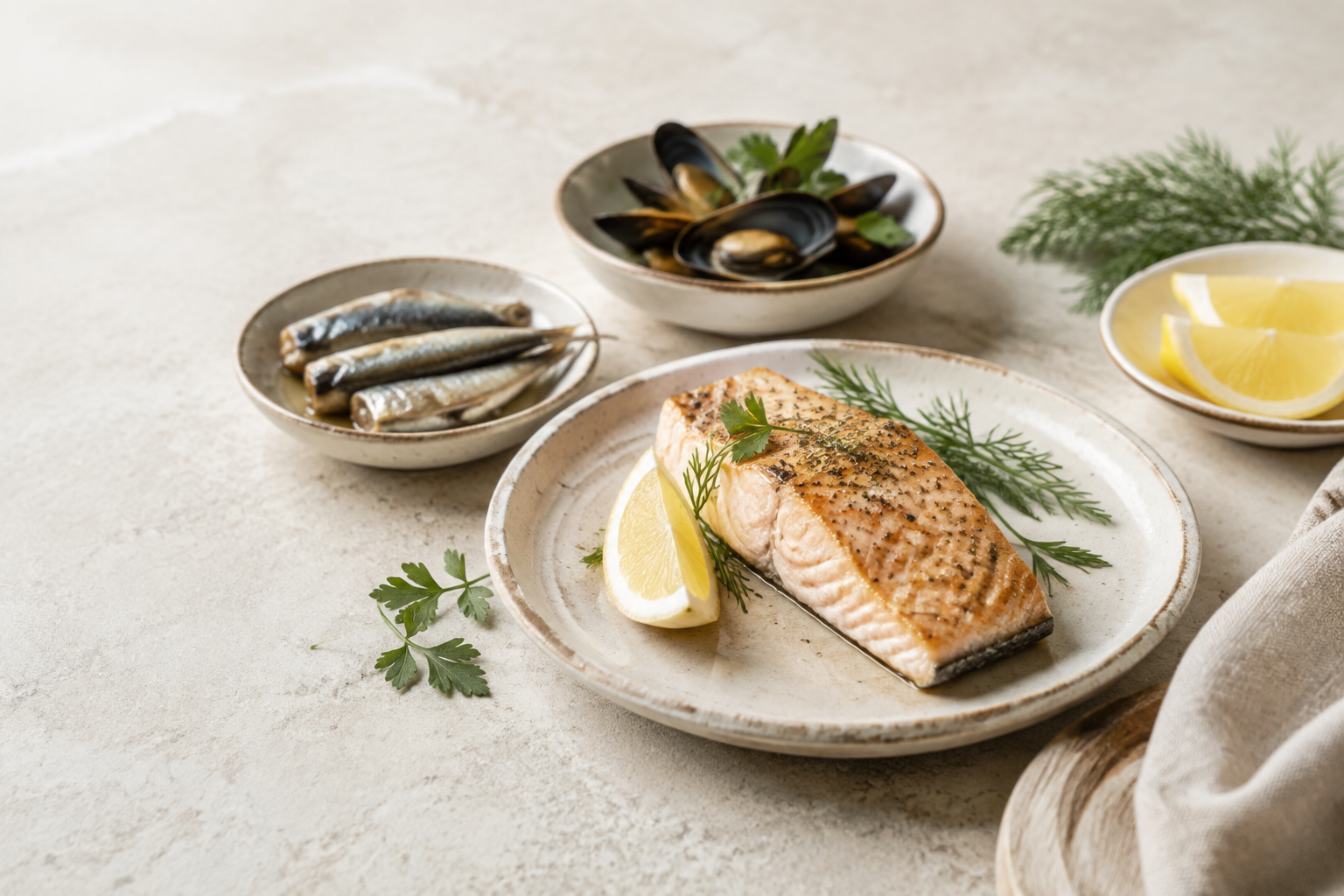
For people who eat fish, I often encourage approximately three to four serves of fish or seafood each week, including regular oily fish. This is a practical food-first target rather than a requirement that will suit everyone.
Salmon, sardines, anchovies, herring, trout and mackerel are particularly useful sources of the long-chain omega-3 fats EPA and DHA. Mussels and oysters can also contribute omega-3.
Tuna is nutritious, but it generally provides less omega-3 than oily fish. It’s better included as part of a wider variety rather than relied upon as the primary source.
Choosing fish with less mercury
Mercury tends to accumulate over time. Large, long-lived predatory fish are therefore generally more likely to contain higher levels than smaller, shorter-lived fish.
Choosing smaller fish such as sardines and anchovies more regularly can provide omega-3 with a lower risk of mercury exposure. Larger predatory fish, including shark or flake and swordfish, are better eaten less frequently.
Does fish need to be wild-caught?
Wild-caught fish can be an excellent choice and may have a more favourable balance of omega-3 to omega-6 fats.
However, farmed salmon still provides valuable EPA and DHA and does not need to be avoided altogether. The nutrient content varies according to the species and how the fish was raised and fed.
Consistency matters more than perfection. Eating an accessible source of oily fish regularly is generally more useful than rarely eating fish because wild-caught options are unavailable or unaffordable.
If you don’t eat fish
Plant foods such as chia seeds, flaxseeds and walnuts provide the omega-3 fat ALA. These can be valuable parts of the diet, although the body’s conversion of ALA into the longer-chain omega-3 fats EPA and DHA is limited.
An algae-derived EPA and DHA supplement may sometimes be considered when fish is not eaten. Any recommendation will depend on your diet and individual needs.
OMEGA-3 SUPPLEMENTS
Do you need an omega-3 supplement?
Not everyone needs to take an omega-3 supplement continuously, and a supplement shouldn’t automatically replace eating nourishing omega-3-rich foods.
For fish oil, the amount of EPA and DHA is more meaningful than the total milligrams of “fish oil” displayed on the front of a product. The appropriate balance and dose also depend on why the supplement is being used.
PERSONAL NOTE: I personally use a high-quality fish-oil supplement during weeks when I have not eaten enough oily fish. This is a flexible way of supporting my intake rather than treating a supplement as a replacement for food.
Quality is especially important because omega-3 fats are vulnerable to oxidation. I consider how a company sources, processes, transports and stores its oil, as well as whether it tests the finished product for freshness and oxidation.
I also look for verification of EPA and DHA content, traceable sourcing and appropriate purity testing for mercury, other heavy metals, dioxins and PCBs. Independent or batch-specific testing can provide greater confidence than marketing claims alone.
Any omega-3 product, dose and timing I recommend will be outlined explicitly in your individual treatment plan. Where relevant, the balance of EPA and DHA will also be selected according to your individual needs and the reason it is being used.
COOKING OILS
Choosing and storing cooking oils
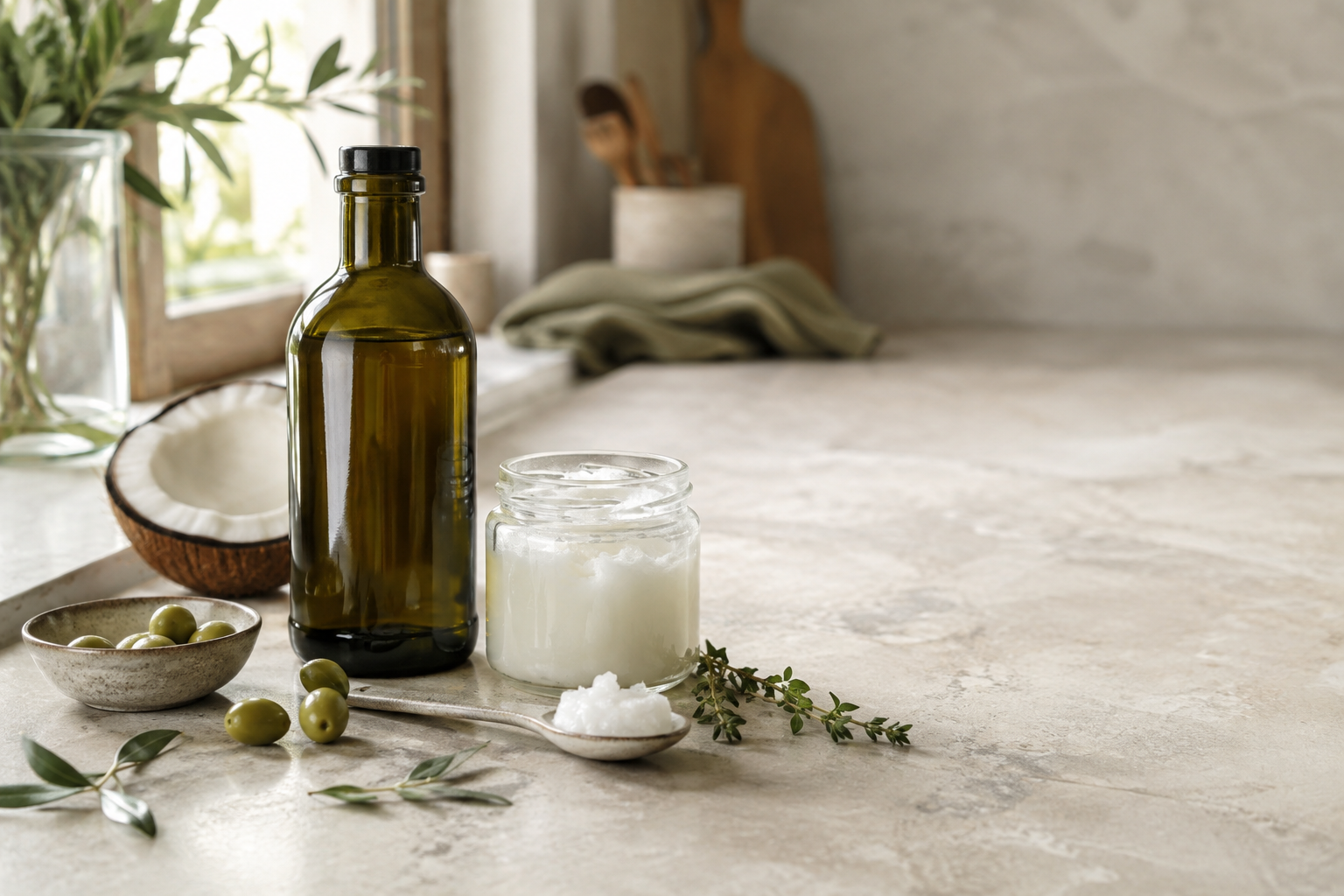
Extra-virgin olive oil is generally my preferred everyday oil. It provides predominantly monounsaturated fat along with naturally occurring plant compounds and can be used in dressings, drizzled over food and for most ordinary home cooking.
Heating reduces some of its more delicate plant compounds, but extra-virgin olive oil remains suitable for sautéing, baking and roasting. There is no need to reserve it exclusively for cold food.
Avoid repeatedly overheating an oil until it smokes or reusing the same cooking oil multiple times.
Extra virgin, virgin or regular olive oil?
Extra-virgin olive oil is produced without the refining used for standard olive oil and generally retains more flavour and naturally occurring plant compounds. Regular or “light” olive oil is more refined. The word “light” refers to its lighter flavour and colour. It does not mean that it contains fewer kilojoules.
For everyday use, choose an extra-virgin olive oil that tastes fresh and that you will use consistently.
Protect olive oil from light, heat and air
Light, heat and oxygen gradually reduce the quality of olive oil.
Choose an opaque tin or a dark-glass bottle where possible. If you use olive oil slowly, a smaller bottle is generally preferable to a large container that remains open for many months. Store it tightly closed in a cool, dark cupboard away from the stove, oven and direct sunlight. A decorative clear bottle beside the cooktop may look attractive, but it’s not the best place to preserve the oil.
Oil that develops a stale, waxy, paint-like or noticeably rancid smell should be replaced.
What about coconut oil?
Coconut oil can absolutely have a place in a balanced diet. It works particularly well when its flavour suits the meal, such as in curries, baking and some Asian-style dishes, and its high saturated-fat content makes it relatively stable during cooking.
Because coconut oil is predominantly saturated fat, I generally recommend using it alongside extra-virgin olive oil rather than making it the main everyday cooking oil. Extra-virgin olive oil remains my preferred option for most regular cooking, dressings and drizzling.
There is no need to avoid coconut oil if you enjoy it. The amount and frequency matter more than treating it as either a “superfood” or something that should never be eaten.
FOODS TO EAT LESS OFTEN
Reduce displacement rather than chasing perfection
An anti-inflammatory pattern does not require perfect eating.
The practical aim is to reduce how often highly processed foods, processed meats, deep-fried foods and excessive alcohol displace vegetables, legumes, whole grains, nuts, seeds, fish and other nourishing foods.
An occasional food does not determine the overall quality of your diet. What matters more is the pattern repeated across most meals and weeks.
Meat and dairy do not automatically need to be eliminated. They can be included in moderate amounts according to your nutritional needs and tolerance, while varied plant foods remain prominent across the week.
Do coffee and tea need to be avoided?
Coffee and tea do not automatically need to be removed from an anti-inflammatory eating pattern. Both contain beneficial naturally occurring plant compounds, but their effects still depend on the person, the amount consumed and when they are used.
Coffee
Coffee may be unsuitable or need to be reduced when it aggravates reflux, loose stools, anxiety, palpitations or disrupted sleep.
Caffeine can remain active for many hours, so moving coffee earlier in the day may be more useful than assuming it must be eliminated completely.
Tea
Black, green and herbal teas can all contribute fluid and plant compounds.
Herbal products still have physiological effects, so the most appropriate choice depends on the individual rather than every herbal tea automatically being beneficial.
Tea and coffee can also reduce iron absorption when consumed close to iron-rich meals or iron supplements. If iron deficiency is a concern, allow appropriate separation and follow the instructions in your individual plan.
AUTOIMMUNE CONDITIONS AND FOOD TRIALS
When the foundations need individualising
An overall plant-forward, Mediterranean-style pattern can provide a useful foundation, but it doesn’t replace condition-specific assessment.
People with autoimmune conditions do not all require the same diet. Removing multiple foods without a clear reason can create nutritional gaps, make eating socially difficult and leave you unsure which change affected your symptoms.
A structured gluten-free trial
In some cases, I may recommend a structured gluten-free trial for a minimum of 30 days. This will be discussed during your consultation and isn’t a standing recommendation for every person with an autoimmune condition.
Where coeliac disease is possible, appropriate testing should generally be considered before gluten is removed because avoiding gluten can interfere with the accuracy of standard investigations.
A food trial should have a defined purpose, clear symptoms or outcomes to monitor and a planned review. Unless ongoing avoidance is medically required, reintroduction is an important part of determining whether removing the food made a meaningful difference.
Digestive tolerance still matters
A food may be nutritious but still poorly tolerated at a particular time.
If you’re experiencing significant digestive symptoms, the immediate plan may temporarily modify fibre, legumes, fermented foods, dairy, gluten or other foods. The longer-term aim is usually to build the broadest varied diet you can comfortably tolerate, not remain on a highly restricted diet indefinitely.
Start with the foundations
01 — Add variety before removing more foods.
Begin with the plant foods you already tolerate and gradually expand their range.
02 — Include an appropriate source of omega-3.
Include oily fish regularly if you eat it, or discuss suitable plant and algae-derived options if you do not.
03 — Make changes gradually enough to sustain them.
A consistent pattern you can maintain is more useful than a perfect diet followed for one week.
If you’re an existing client, follow the recommendations in your treatment plan where they differ from this general guide.